Artgravis: The Blackletter Font for Bold Branding
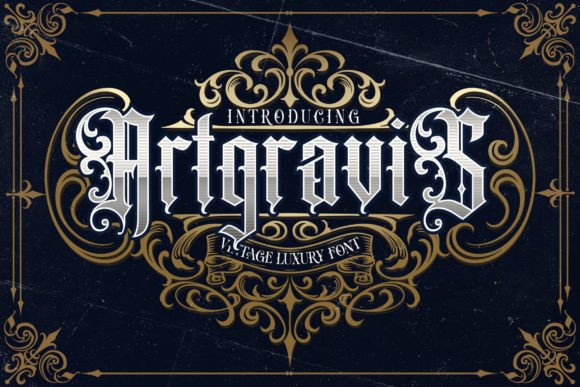
There is a specific weight and history to Blackletter typography that immediately commands attention. It evokes a sense of tradition, craftsmanship, and undeniable authority. When you choose a typeface for a branding project, you are not just selecting letters; you are selecting a personality. Artgravis enters this space not as a mere revival of old scripts, but as a refined, modern interpretation of the classic Blackletter style. It retains the intricate detailing and sharp edges of traditional Gothic text but injects a contemporary energy that suits today’s retro-urban aesthetic perfectly.
Unlike the dense, often illegible body text found in medieval manuscripts, Artgravis is designed as a premium font for display purposes. Its visual characteristics are defined by high-contrast strokes, sharp points, and a condensed structure that feels both aggressive and elegant. It does not whisper; it announces. The texture of the font suggests ink or etching, making it an ideal choice for projects that require a vintage or handcrafted feel without looking outdated. If you are working on a design that needs to bridge the gap between historical gravitas and street-level edge, this typeface offers a compelling solution.
The Retro-Urban Aesthetic: Where Artgravis Thrives
The modern design landscape has seen a massive resurgence in vintage and tattoo-inspired aesthetics. This isn't just about nostalgia; it is about authenticity. Brands want to look established and rooted in culture. Artgravis excels in this "retro-urban" niche. It captures the spirit of hand-painted signage and classic tattoo flash art, but with the precision of modern typography.
For logo design, Artgravis creates an immediate focal point. Consider a craft brewery, a barbershop, or a streetwear brand. These businesses rely on visual identity to convey their values of quality and tradition. Using Artgravis for the primary wordmark gives these brands an instant sense of heritage. It tells the customer that this business values the "old ways" of doing things—care, attention to detail, and durability. Because the font is so visually distinct, it requires very little supporting imagery to make an impact. A simple lockup of the wordmark and a clean tagline is often enough to create a professional brand identity.
Beyond static logos, this creative font is a powerhouse for packaging design. Imagine a whiskey label, a hot sauce bottle, or a line of artisanal leather goods. Artgravis brings a tactile quality to these surfaces. When printed on textured paper or embossed on foil, the sharp serifs and heavy strokes of the font add a layer of luxury and craftsmanship. It suggests that the product inside is premium and carefully curated. This is the kind of detail that small business owners and entrepreneurs can leverage to compete with larger, established brands on the shelf.
Strategic Font Pairing and Hierarchy
One of the most common questions regarding ornate display fonts is: "How do I read it?" It is a valid concern. Blackletter fonts, including Artgravis, are visually complex. They are not designed for long-form paragraphs. Using them for body copy would be a mistake that compromises readability. Instead, Artgravis should be treated as the "loud" voice in your design conversation, reserved for headlines, titles, and logos.
To build a successful visual hierarchy, you need to pair Artgravis with a quieter partner. A clean sans serif font or a simple serif font works best. The contrast is key. The complexity of Artgravis needs the breathing room of a minimalist sans serif to remain legible. For example, pairing Artgravis with a geometric sans serif like Montserrat or a classic serif like Garamond creates a balance between "heritage" and "clarity." This font pairing strategy ensures that your headlines pop while your supporting text remains easy to scan.
When applying this to web design or social media graphics, use Artgravis for the "hook"—the main title of a poster, the headline of a blog post, or the subject line of an email. Then, switch to your secondary font for the details. This guides the viewer’s eye exactly where you want it to go. It prevents the design from feeling cluttered while maintaining a cohesive, professional look. This approach respects the user experience, ensuring that the design is not just beautiful, but functional.
Applications in Digital and Print Media
The versatility of Artgravis extends across various media, though its application changes slightly depending on the medium. In editorial design, such as magazines or book covers, Artgravis can evoke a specific genre. It is perfect for mystery, thriller, or historical fiction covers where the atmosphere is paramount. The font acts as a visual cue, instantly communicating the tone of the content to the reader.
For digital creators and content creators, this font is a valuable addition to a library of design assets. It is particularly effective for YouTube thumbnails, podcast cover art, or merch designs. In these contexts, the font needs to be legible at smaller sizes or from a distance. Artgravis holds its structural integrity well, maintaining its distinct silhouette even when scaled down slightly, provided the background is not too busy.
However, practical guidance is necessary here. When using Artgravis for digital applications, pay close attention to kerning—the spacing between letters. Blackletter fonts often have irregular shapes that can cause letters to crash into one another. Manually adjusting the tracking and kerning in your design software will ensure the text looks polished rather than accidental. This small step elevates the design from a hobbyist project to a professional deliverable.
Choosing and Licensing Your Typography
For entrepreneurs and marketers, the decision to use a specific font often comes down to practical logistics. Is it a commercial font? Can I use it on merchandise? These are critical questions. Artgravis is a professional-grade asset, and like all high-quality design resources, it requires a license for commercial use.
Before finalizing a project, always review the licensing terms. If you are a small business owner planning to print Artgravis on t-shirts, hats, or packaging, you need to ensure your license covers "print and merchandise." If you are a web designer using it for a client's website, you need a web font license. Skipping this step can lead to legal headaches down the road. Treat your typography like any other business investment—secure the rights properly.
Furthermore, explore the full family of the font. Does it come with alternative glyphs, swashes, or different weights? A robust premium font often includes variations that allow for customization. You might find that a specific alternate letterform fits your logo better than the standard one. Taking the time to explore these options allows you to create a unique look that feels custom-made for the brand, rather than "off the rack."
Final Thoughts on Artgravis
In a market saturated with safe, geometric sans serifs, Artgravis offers a way to stand out. It brings character, history, and a touch of rebellion to a design. It is not the right choice for a corporate banking report, but for a tattoo studio, a metal band, a vintage clothing line, or a boutique distillery, it is an exceptional choice.
By understanding its personality and applying it strategically, you can use Artgravis to build a brand identity that feels authentic and engaging. It reminds us that typography is not just about reading words; it is about feeling them. When used correctly, this font doesn't just display text—it builds a world.