Cunigund: Where Gothic Tradition Meets Modern Clarity
Finding a typeface that balances historical weight with contemporary usability is a rare discovery. Cunigund achieves this balance by taking the intricate, vertical forms of Gothic Blackletter and stripping away the excessive ornamentation. The result is a premium font that retains the "vintage vibe" of medieval manuscripts but applies a "modern twist" through simplified geometry and increased legibility. It is designed for creators who need the authority of history without the visual noise that often makes traditional blackletter difficult to read in modern contexts.
The Anatomy of Cunigund: Visual Style and Personality
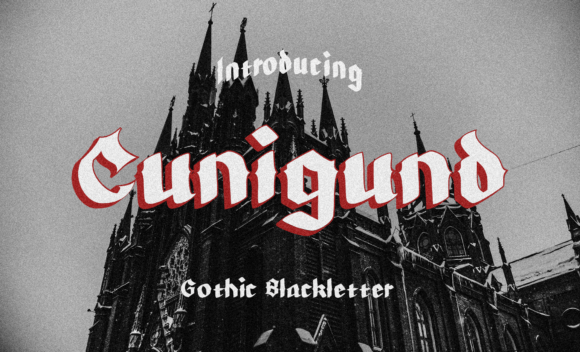
At its core, Cunigund is a display font. This means it is engineered to capture attention at larger sizes, such as headlines, logos, and posters, rather than for long-form body copy. The visual personality of Cunigund is defined by its "plain and clean aesthetic." Unlike traditional Fraktur scripts, which can be jagged and overly calligraphic, Cunigund simplifies the letterforms. It focuses on high-contrast strokes—thick verticals meeting thin horizontals—which creates a rhythm that is both commanding and elegant.
The font’s versatility is significantly expanded through its seven unique styles. A single-style font often limits a designer’s ability to create hierarchy, but with Cunigund, you have a toolkit. These variations allow you to shift the mood of the typeface from a subtle, textured look to a bold, solid impact. This range makes it a robust asset for any designer’s library, ensuring that the font can adapt to different moods while maintaining a consistent brand identity.
Strategic Applications: Where Cunigund Fits Best
Understanding where to deploy a specific font is just as important as the font itself. Because Cunigund blends historical reference with modern simplicity, it occupies a unique space in modern typography. It serves as a bridge between the past and the present, making it ideal for projects that require a sense of authenticity or heritage but need to function in a digital ecosystem.
Branding and Logo Design
In logo design, distinctiveness is paramount. A generic sans serif font can sometimes fade into the background, but Cunigund offers immediate character. It is particularly effective for brands in the artisanal, fashion, brewing, or creative agency sectors. When used in a logo, it communicates craftsmanship and attention to detail. However, because of its strong personality, it pairs best with neutral secondary fonts. A standard serif font or a clean sans-serif can handle the body text, allowing Cunigund to own the spotlight in the header without overwhelming the viewer.
Publishing and Editorial Design
For editorial design, such as magazine covers, book titles, or zine headers, Cunigund provides a strong focal point. It grabs the reader's eye and sets the tone for the content inside. In packaging design, particularly for handcrafted goods or premium products, this font can elevate the perceived value of the item. It suggests that the product inside is curated and intentional, influencing the customer's perception before they even open the box.
Digital and Social Media
In the fast-scrolling environment of social media, a creative font like Cunigund stops the thumb. It is excellent for social media graphics where you need to convey a message quickly and stylishly. Whether it is a quote card, a sale announcement, or a YouTube thumbnail, the high contrast of the font ensures readability even on small mobile screens, provided the size is kept large enough to function as a display element.
Practical Guidance for Implementation
Adopting a new typeface requires more than just liking how it looks; it requires a strategy for integration. Here is how to effectively utilize Cunigund in your workflow.
Font Pairing and Hierarchy
The most common mistake with Gothic Blackletter styles is overuse. Cunigund should be treated as the "spice" of your design, not the main ingredient for paragraphs. For web design, pair Cunigund with a highly legible body font. A geometric sans-serif often works well because its clean circles and lines contrast nicely with the angular nature of Cunigund. This contrast creates a clear visual hierarchy, guiding the user's eye from the headline to the supporting text naturally.
Readability Considerations
While Cunigund is cleaner than traditional blackletter, it is still a stylized display font. Readability is context-dependent. It works perfectly for headers, t-shirt designs, and art crafts where the text is short. Avoid using it for long sentences or small body text, as the intricate details may blur or fatigue the reader's eye. Always test your designs at the intended output size—what looks sharp on a 27-inch monitor might look cluttered on a printed business card.
Evaluating the Styles
Take time to explore the seven unique styles included with Cunigund. Do not settle for the default. One style might feature subtle textures that work beautifully for a grunge aesthetic in poster design, while another might be cleaner and more suited for a minimalist logo. Experimenting with these variations allows you to tailor the font to the specific emotional tone of your project.
The Commercial and Creative Advantage
For entrepreneurs and small business owners, assets need to work hard. Cunigund is not just a decorative element; it is a commercial font designed to help you stand out in a crowded market. Its ability to convey both elegance and strength makes it a versatile tool for brand identity systems.
Whether you are designing merchandise, creating headers for a blog, or establishing a visual language for a startup, Cunigund offers a solution that feels both timeless and fresh. It allows you to tap into the rich history of Gothic typography while maintaining the clarity required by modern typography. By incorporating Cunigund into your design assets, you are equipping yourself with a typeface that commands attention and delivers a lasting impression.