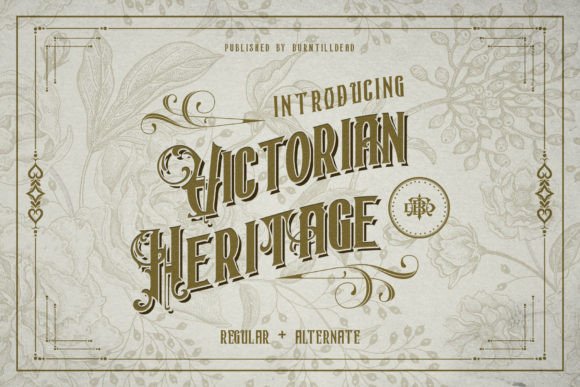
Victorian Heritage: A Blackletter Font for Timeless Design
The Allure of a Classic Typeface
In a digital landscape saturated with minimalist sans serif fonts and playful handwritten styles, there's a certain gravity and authenticity that only a well-crafted blackletter can provide. Victorian Heritage is a premium font that channels this historical weight, offering a splendid and elegant character rooted in tradition. It's not just a typeface; it's a design asset that communicates heritage, craftsmanship, and a refined sensibility. For designers, entrepreneurs, and creators seeking to imbue their work with a distinct sense of place and history, understanding how to wield this powerful tool is key. Its intricate strokes and formal posture make it a standout choice for projects demanding sophistication.
The visual personality of Victorian Heritage is immediately recognizable. It features the sharp, angular lines and dense, textured appearance characteristic of blackletter scripts, often called Gothic or Old English. This style carries an inherent formality and a connection to historical printing, from medieval manuscripts to Victorian-era signage. The font’s elegance stems from its balanced proportions and deliberate detailing, avoiding the overly ornate or illegible extremes some blackletter fonts fall into. It strikes a careful balance between historical authenticity and contemporary usability, making it a versatile creative font for modern applications.
Where Victorian Heritage Truly Shines
Choosing the right context for a display font like Victorian Heritage is crucial. Its strong personality means it excels as a headline or logotype element where impact and immediate recognition are paramount. Think of logo design for craft breweries, boutique law firms, heritage brands, or artisanal product lines. The font instantly conveys tradition, quality, and a story worth telling. In packaging design, it can elevate labels for premium goods—whiskey, gourmet foods, or specialty coffee—creating an unboxing experience that feels curated and substantial.
Beyond branding, its applications in editorial design and publishing are compelling. Book covers for historical fiction, fantasy novels, or classic reprints benefit immensely from its authoritative presence. Magazine features on architecture, history, or luxury lifestyle can use Victorian Heritage for drop caps or section headers to establish a sophisticated tone. For digital creators, it adds depth to social media graphics, especially for announcements, quotes, or event promotions where a traditional, trustworthy vibe is desired. Even in web design, it can serve as a powerful hero font for specific landing pages or portfolio sites for artists and craftspeople, provided the surrounding text uses a highly legible complementary font.
- Branding & Identity: Logos, business cards, letterheads for heritage-focused brands.
- Print & Packaging: Wine labels, book covers, event invitations, certificates.
- Digital Media: Website headers, YouTube channel art, podcast cover art, premium social media templates.
- Personal Projects: Custom merchandise, personalized stationery, tattoo design inspiration, academic presentations on historical topics.
Mastering the Font: Practical Guidance
Working with a bold typeface like Victorian Heritage requires a thoughtful approach to maintain readability and visual hierarchy. Its primary strength is as a display font, meaning it's designed for large sizes. Using it for body copy is generally inadvisable, as its intricate details can become cluttered and difficult to read in long paragraphs. The rule of thumb is to let it command attention in headlines, logos, or single impactful phrases, then pair it with a clean, simple serif or sans serif font for supporting text.
Effective font pairing is essential. Victorian Heritage’s ornate nature pairs beautifully with neutral, geometric sans serif fonts (like Montserrat or Lato) or elegant, transitional serif fonts (like Georgia or Times New Roman). The contrast allows the blackletter to stand out without creating visual chaos. Before committing to a project, always test the font in context. View it at the intended size and on the relevant medium—whether a mobile screen, a printed brochure, or a product mockup. Check how the letterforms interact and ensure the overall message aligns with your brand identity.
One of the most practical features of Victorian Heritage is its PUA encoding. This means every glyph, swash, and ligature is accessible through standard character maps, even in basic design software. This accessibility allows you to fully explore the font’s decorative potential, adding unique flourishes to initials or creating custom typographic compositions without needing advanced OpenType features. Always review the included styles and character set provided by the type designer to understand the full range of creative possibilities at your disposal.
Finally, consider the licensing. As a commercial font, ensure your intended use—whether for a client project, merchandise for sale, or digital product—is covered by the license you purchase. This protects both your work and the intellectual property of the font creator. By applying Victorian Heritage with purpose and restraint, you can harness its historic charm to build a compelling, professional, and memorable visual presence that resonates with an audience appreciating depth and artistry.