Three Clover: A Bold Blackletter for Modern Design
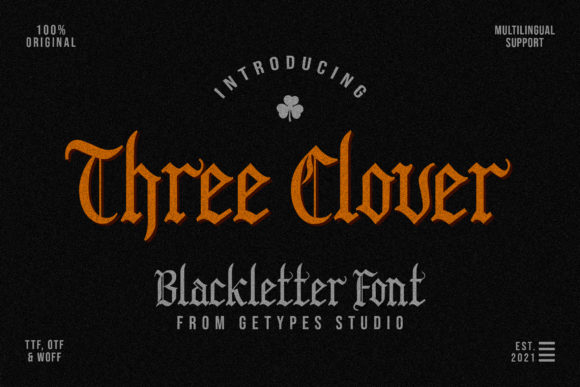
When you need a typeface that carries historical weight but speaks in a contemporary voice, Three Clover enters the conversation. This is not your average blackletter font. It retains the dramatic strokes and angular personality of traditional Gothic scripts, yet it feels surprisingly fresh. As a premium font choice, it moves away from the dusty, medieval look often associated with this category. Instead, it offers a polished, robust aesthetic that commands attention without sacrificing legibility.
At its core, Three Clover is an authentic and bold display typeface. The visual rhythm is tight and structured, featuring the sharp turns and heavy verticals typical of blackletter design. However, the spacing and curves have been refined for modern usage. It doesn’t just scream "old"; it shouts "confident." This balance makes it a versatile asset for creators who want to bridge the gap between vintage charm and modern edge. Whether you are designing a logo or laying out a magazine spread, this typeface provides a distinct voice that is hard to ignore.
The Visual Personality: Bold, Authentic, and Unapologetic
Understanding the anatomy of Three Clover helps in knowing where to use it. The letterforms are dense. This creates a texture on the page that feels substantial and grounded. Unlike a light script font or a neutral sans serif font, blackletter typography relies on contrast. The thick and thin strokes within Three Clover are pronounced, giving it a dynamic energy.
From a brand identity perspective, this font communicates specific traits immediately. It suggests tradition, craftsmanship, and authority. Think about industries where heritage matters: brewing, artisanal goods, barbershops, or high-end streetwear. Using Three Clover in these contexts signals that you take your craft seriously. It acts as a visual shorthand for quality and durability. Yet, because the design is clean and avoids excessive frills, it also feels accessible to a younger demographic familiar with the resurgence of Gothic styles in pop culture and fashion.
Strategic Applications: Where Three Clover Shines
Choosing the right display font is about context. You wouldn’t use a heavy blackletter for body copy in a technical manual. However, for headlines and impact text, Three Clover is a powerful tool.
In packaging design, this typeface excels at creating shelf appeal. Imagine a coffee bag or a craft beer label. The bold strokes of Three Clover can anchor the design, providing a strong focal point that draws the customer in. It pairs exceptionally well with minimal layouts where the typography needs to do the heavy lifting. For editorial design, such as magazine covers or chapter openers, it adds a layer of sophistication and drama that standard serif or sans serif fonts often lack.
Digital creators also find value here. For social media graphics, stopping the scroll is the primary goal. The distinct silhouette of Three Clover cuts through the noise of generic text overlays. It is excellent for quote graphics, event announcements, or headers for YouTube thumbnails. In web design, it serves beautifully as a hero text element, setting the mood for the entire site experience immediately upon loading.
Mastering Font Pairings and Hierarchy
A creative font like Three Clover rarely works best in isolation. The key to professional modern typography is pairing. Because Three Clover is so expressive and detailed, it requires a calm partner.
The classic approach is to pair a blackletter with a clean sans serif font. The geometric simplicity of a sans serif provides breathing room for the complex details of the blackletter. This contrast creates a clear visual hierarchy, guiding the reader’s eye from the bold headline to the readable body text. Alternatively, pairing it with a simple serif font can create a cohesive, "old-world" aesthetic that feels timeless.
When testing pairings, look at the x-height and weight. You want the secondary font to complement, not compete. If Three Clover is the loudest voice in the room, your secondary font should be the polite listener. This balance ensures that your design assets look curated rather than chaotic.
Practical Considerations for Designers
Before integrating any new typeface into your workflow, a professional evaluation is necessary. Here is how to get the most out of Three Clover:
- Readability at Scale: Always test the font at the size it will be viewed. Blackletter fonts can lose definition at very small sizes. Ensure your specific use case—be it a large banner or a business card—maintains clarity.
- Licensing and Usage: Ensure you have the correct commercial font license for your project. If you are creating assets for a client, verify that the license covers their intended distribution, whether for print merchandise or digital templates.
- Color and Contrast: High-contrast backgrounds usually work best. Because the font is bold, it stands up well to vibrant colors, but it also looks stunning in monochrome black-and-white layouts.
Ultimately, Three Clover is more than just a typeface; it is a statement. It offers a bridge between the past and the present, providing designers, marketers, and hobbyists with a robust tool for storytelling. By applying it thoughtfully to your logo design, stationery